What Do we Need to Know first?
Before any serious discussion or analysis of the novel can take place it is necessary to obtain some background information. Of note, who wrote the novel, why they wrote the novel, the general context of the novel (such as its style), and the plot of the novel (which I'll elaborate on in the next page).
What is Socialist Realism and What Does It Have To Do With The Novel?
Socialist realism is an art style which came to popularity in the Soviet Union during the 1930s and 40s under Stalin's rule. It was most prevalent in the Soviet Union from 1932 until the mid 1980s with Gorbachev's liberalization reforms. It takes inspiration from the Russian realist tradition of the 19th century, in addition to its obvious Marxist basis, in that it aims to be as realistic, objective, or reflective of real life as possible.[1] Additionally, socialist realism places a high emphasis on the ideals of socialism in conjunction with an objective portrayal of real life. Emphasizing morals which Marxists, communists, would consider valuable in the struggle for communism. Such as bravery, commitment, discipline, the general "goodness" of socialism, among other things. Some examples can be found below. For more info on the principles of socialist realism I would recommend reading what Soviet writer Maxim Gorky and Soviet politician Andrei Zhandov had to say on the matter. Both of their works can be found on the marxists internet archive, or if you just go searching or asking around for them they can be found relatively easily, and are rather important in understanding the marxist view of art and so socialist realism. [2][3][4]
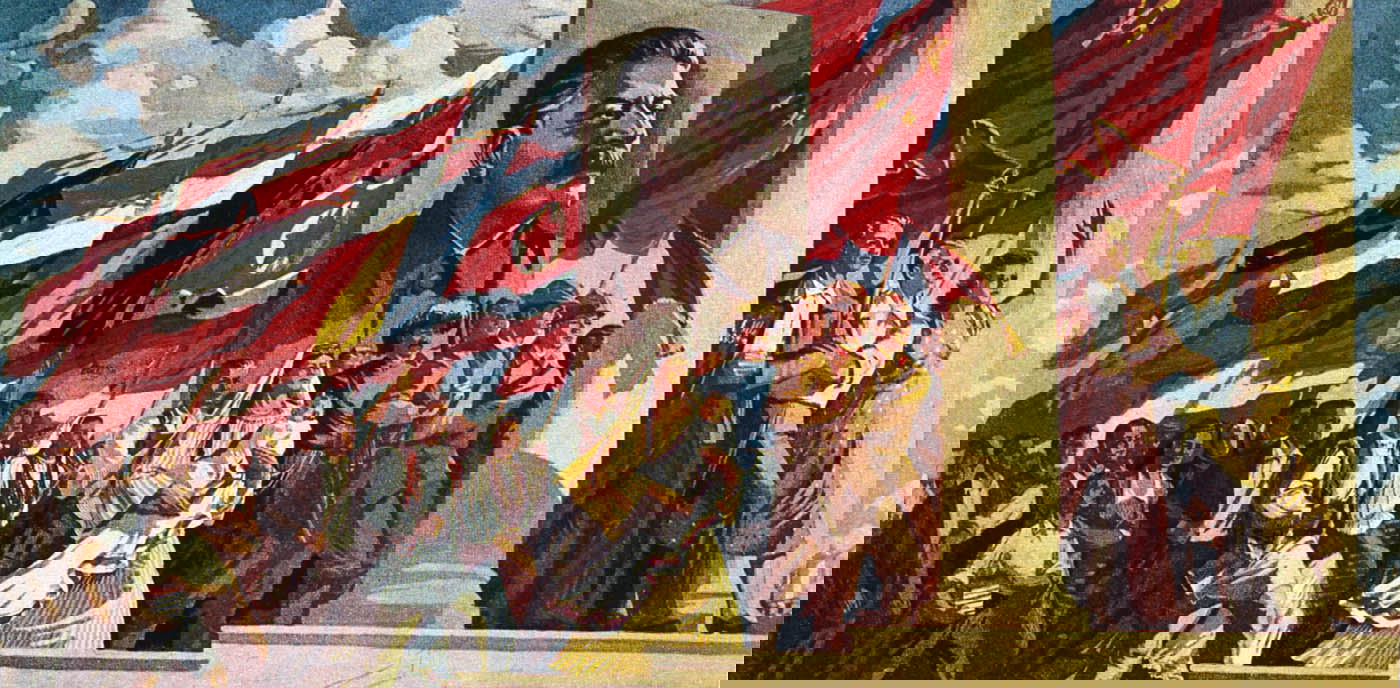
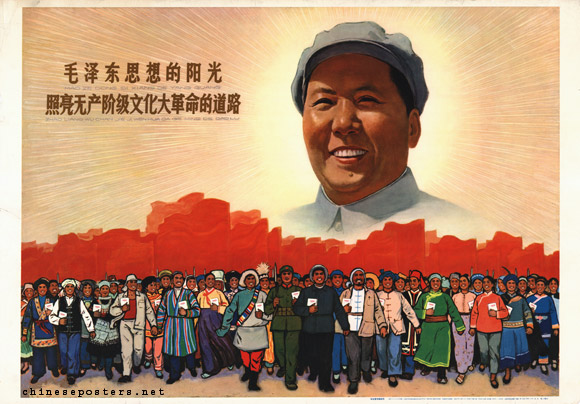
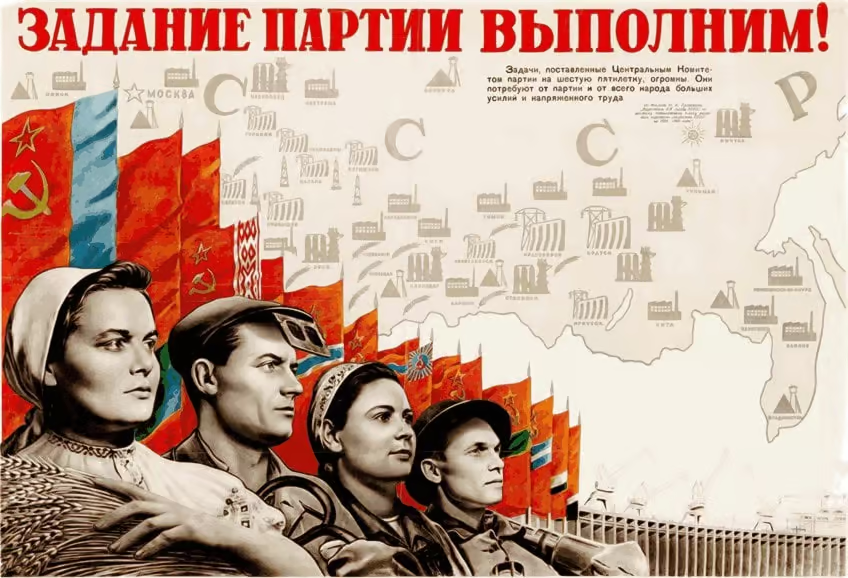

Of course as Soviet socialism spread in the late 1940s into eastern Europe with the defeat of Nazism, East Asia with the defeat of Japanese imperialism, most notably China and the DPRK, and other places throughout the globe through the cold war, socialist realism spread alongside it even in spite of the the diverging political differences in pre and post war Soviet socialism.
With the collapse of the Soviet Union, the retreat of the international communist movement, and general shifting in cultural styles, socialist realism has fallen out of fashion almost everywhere except in North Korea.[5] Additionally I did try looking for any remaining socialist realist creators but was only able to come up with 2, Osha Neumann and Brian Thiele, from an article in the "Cosmonaut Magazine".[6]. So it can obviously be deduced that socialist realism has fallen off so to speak, and socialists, of all flavors, today have moved toward other styles.
Linking all this back to the novel, "How The Steel Was Tempered" is in fact one of the exemplary executions of socialist realism and is often utilized as a shining example of sorts of the style in literature. In total in the USSR alone it sold over 36.4 million copies.[7] The novel was very much written with the intention of promoting socialist ideals and spreading enthusiasm for revolution. Nikolai Ostrovsky says as much directly in "HAIL LIFE" on page 28 in a report he delivered to a local committee of the CPSU(B), the Communist Party of the Soviet Union (Bolsheviks), where he says:
"Comrades, How the Steel Was Tempered is my response to an appeal in which the Central Committee of the Young Communist League calls upon Soviet writers to portray the young revolutionary of our time."[8]
And so the connection is rather clear. Additionally, this report was written and received in 1935 which was when socialist realism was really getting popular, in the USSR, as well as the novel itself being published in 1932. The subject matter and perspective of the novel is also a dead giveaway, if for whatever reason it was unclear, the latter chapters themselves discuss the protagonist's recovery from fighting in the Bolshevik army during the near end of the civil war and describe their enemies, of the red army, in rather bitter terms. Upon the approaching of the Polish Army into western Ukraine, and evacuation of the red army, where the novel takes place, on page 116 a character close to the protagonist, who is Polish, says:
"They’ll come down hard on our folks, especially mine because we’re Poles. You, a Pole, they’ll say, opposing the Polish Legion. They’re sure to kick my old man out of the sawmill and flog him."[9]
Thus it is pretty clear that the novel posses a positive tone in relation to the revolutionary, Bolshevik, socialist forces and a negative tone toward those in opposition to revolution, in this instance the Polish Legion. Which is in line with principles of socialist realism.
Who is Nikolai Ostrovsky?
In addition to understanding the stylistic context of the novel, it is also important to understand the background, to some level, of the person who wrote the novel. In short Nikolai Alexeevich Ostrovsky was a Ukrainian-Soviet socialist realist writer born in 1904 to a poor working class family in western Ukraine. His life, in broad strokes, was the same as his character he is most known for, the protagonist of the novel of focus, Pavel Korchagin, though there are some differences in their life stories. Both of them were from western Ukraine, worked more or less the same jobs throughout their lives, helped the Bolshevik underground in Ukraine during the civil war, joined the young communist league, YCL, fought for the red army, and lost sight in one of their eyes due to war injuries, among other similarities. Pavel's life story, and so the overall plot of "How The Steel Was Tempered" was based off of Nikolai Ostrovsky's own life afterall. Through the latter part of his life Ostrovsky was a committed communist and a relatively big figure among the writers in the Soviet Union, even receiving the "Order of Lenin" award for his writing.[10]
Why Was The Novel Written?
I tangentially addressed this in the section discussing socialist realism and its relation to the novel, essentially the novel was written as a means of portraying the struggles of the communists in a positive light and so to stir up the youth of the Soviet Union to continue on with socialist revolution. As mentioned in the "HAIL LIFE" quote I provided previously, but also, not too long after that, on pages 28 and 29 Ostrovsky expounds on additional motivations as to why he decided to write, especially since he was disabled, blind and paralyzed, so doing much of anything was difficult. On those pages he says:
"How did I come to be a writer? Illness put me out of commission. I could not work among my comrades; could not move about; lost my sight. Life set me the task of mastering some new weapon, that might return me to the ranks of the advancing proletariat. Writing—that can be done even when a person cannot move or see. Write—of what? “Write about what you yourself have seen and experienced,” my comrades told me. “Write about the people you know, the environment in which you grew. Write about those who fought under the Party’s banners for Soviet rule""[11]
And so it can be seen that there was also a personal dimension to his desire to write. That is he didn't want to be left behind in the progressing struggle and wanted to do something, anything, to contribute, and that something was writing.
Next Page - Themes in How The Steel Was Tempered